1) In what ways does your media product use, develop or challenge forms and conventions of real media products (film openings)?
1a) 9 Frame Analysis: The Shawshank Redemption

The first shot shows the logo of Warner Bros. Pictures who were the main distributor for 'The Shawshank Redemption'. Underneath the Warner Bros. logo it, says 'A TimeWarner Company' as TimeWarner is in partnership of Warner Bros.
The second shot shows the production logo of the production company for this film; 'Castle Rock Entertainment'. Castle Rock Entertainment are an American production company. And this film is American.
The third shot shows 'Castle Rock Entertainment' who were the film's production company in the centre of the screen. The screen is a black background with 'Castle Rock Entertainment Presents' in white lettering to make it stand out in the background which of course emphasises it.
The fourth shot shows the title of the film; 'The Shawshank Redemption' in the centre of the screen with the same black background in the same font as the previous shot. The font for the title of the film is slightly bigger to show what the film is called. Again the black background with the white lettering, which emphasises the title.
The fifth shot shows the name of the actor who was the lead role in this film, 'Tim Robbins' who plays Andy Dufresne in this film. Like the previous shot it's the same lettering with the same background, but with a smaller font.
The sixth shot shows the name of the actor who stars as one of the other main characters in this film, 'Morgan Freeman' who plays Ellis Boyd 'Red' Redding'. Again, the same lettering with the same font emphasizing in the same background.
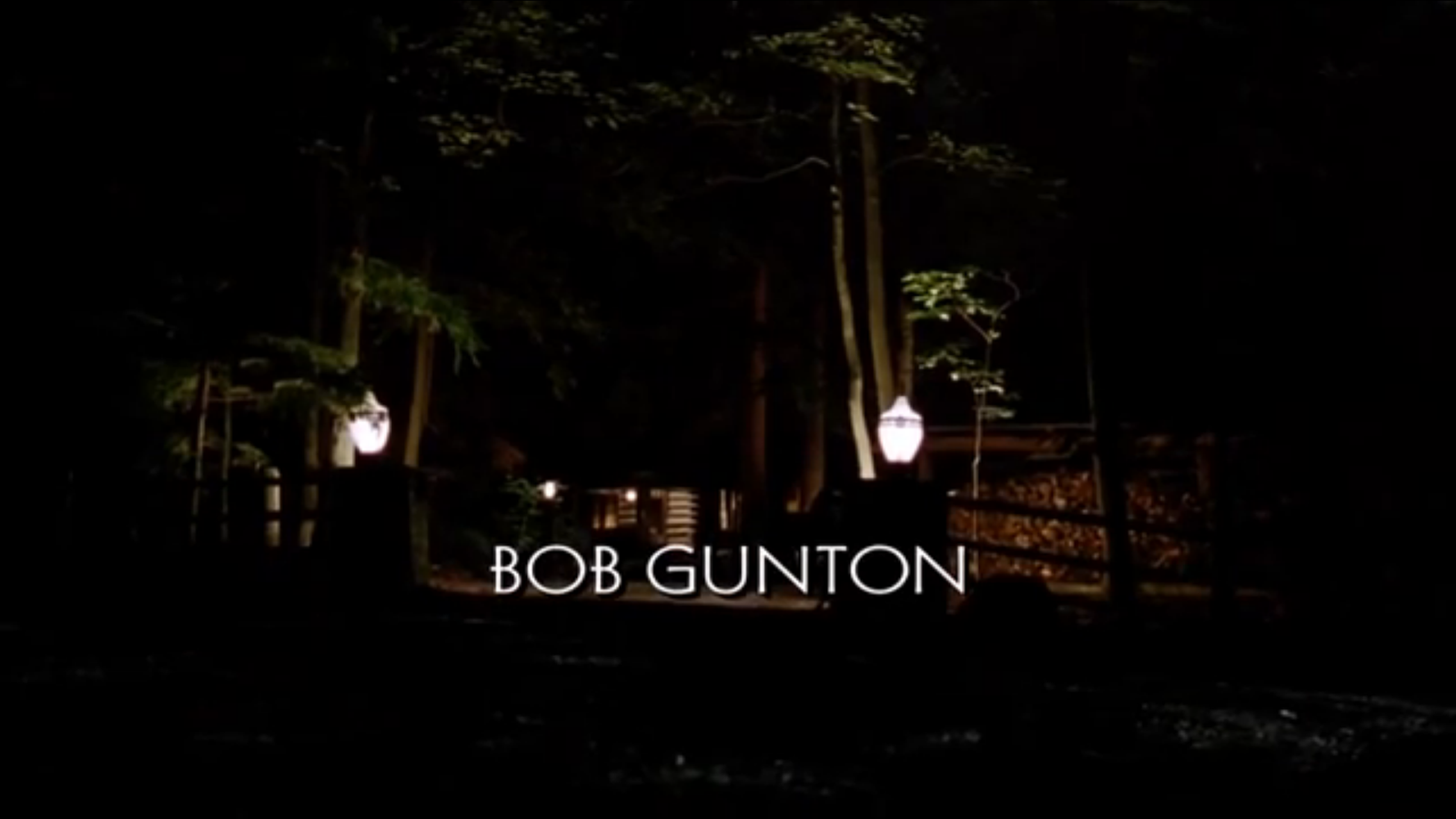
The seventh shot shows an establishing shot of the house of where the lover of Andy's wife's lover lives. In this shot, appearing in the screen is the actor of the character;
'Warden Norton' who is played by Bob Gunton.
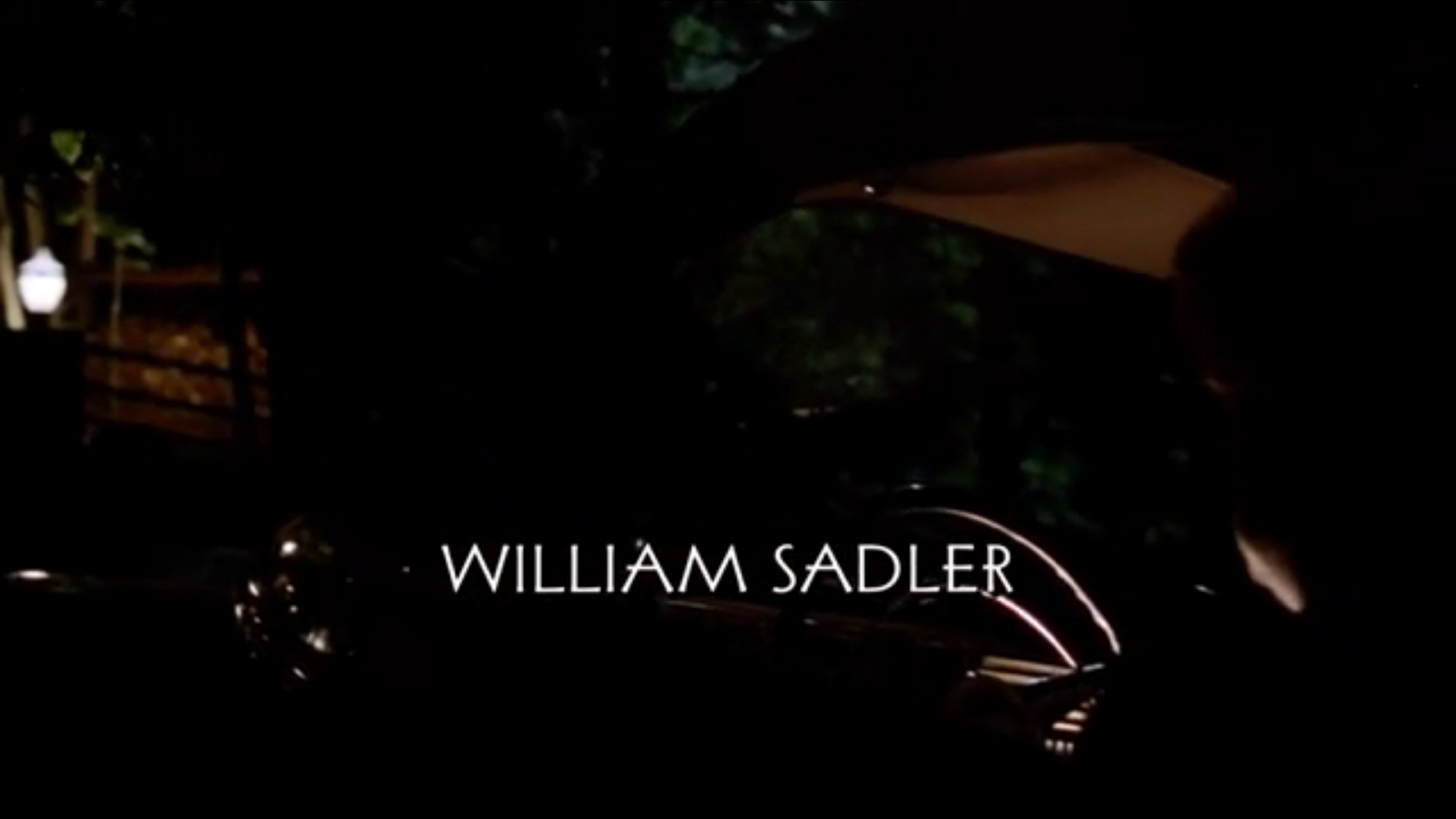
The eighth shot shows a point of view shot of Andy Dufresne sitting in his car, listening to the radio outside the house of his wife's lover. Like the previous shot, another actor's name appears in the screen with the same lettering; 'William Sadler', who plays 'Heywood' in this film.
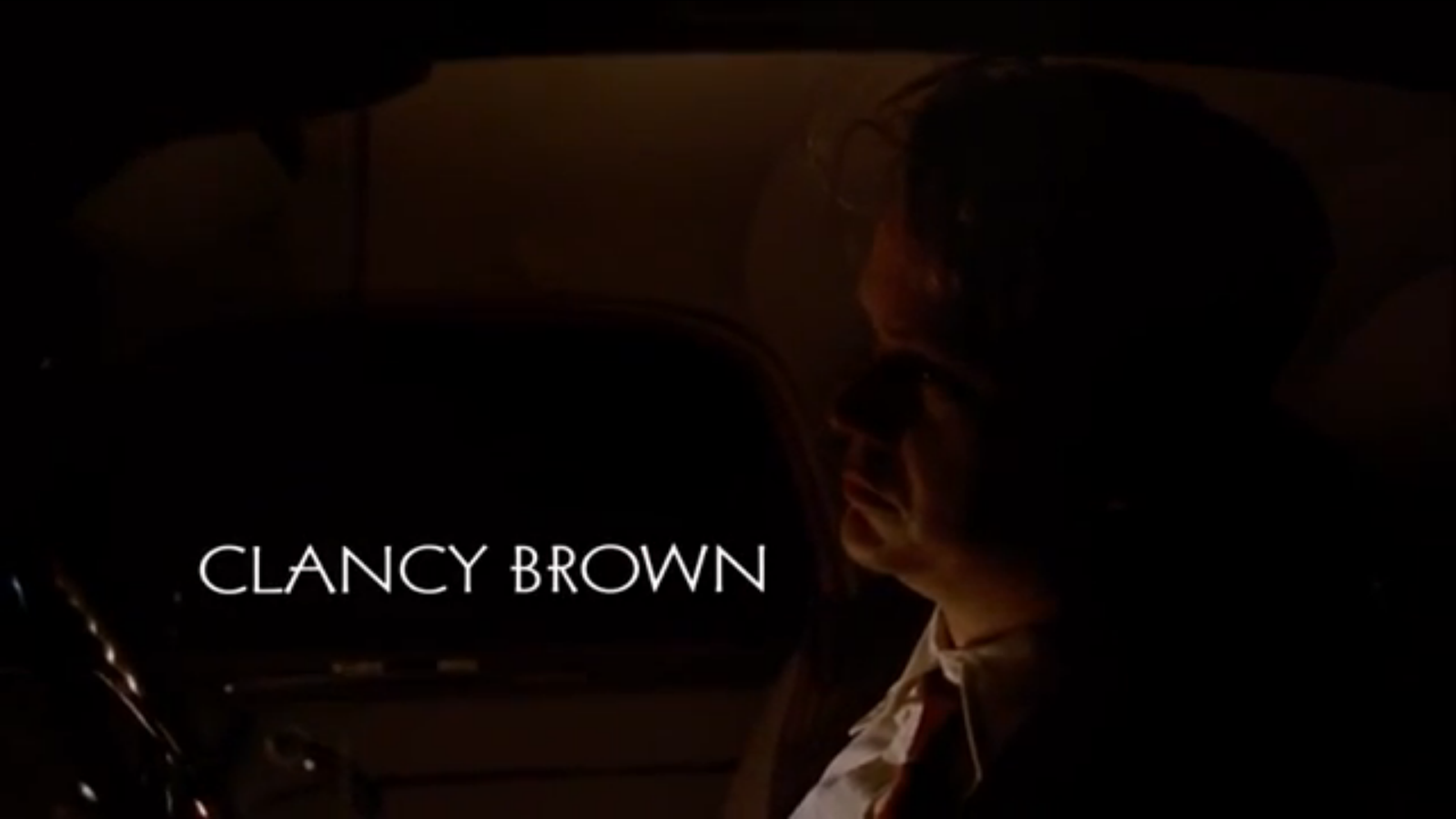
The ninth shot shows a close up shot of Andy from the side sitting in his car. Again, like the previous shot, another actor's name appears; 'Clancy Brown' who plays Captain Hadley, in this film. The same font with the same colour is used showing the actor's name on the screen.
1b) 9 Frame Analysis: 'Catch a Convict'
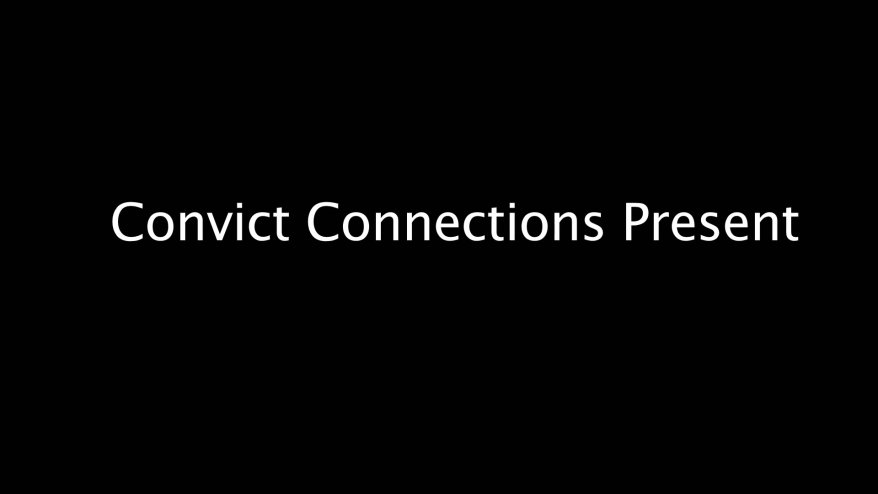
The first screenshot shows the name of the production company for our film; 'Convict Connections. The white typeface lettering of our production company in a black background makes it stand out, which of course will engage our audience.

The second screenshot shows the name of the company, who distributes our film; 'Howard Media Studios'. Again, the white lettering in a black background engages our audience and is seen at the start of one of our influential films because this way in which a title appears is often seen in most films.

The third screenshot shows our main character running out of prison doors because he's determined to escape from prison because he knows he won't survive in there. The title you see fade in, in this shot shows who plays the lead role in our film.
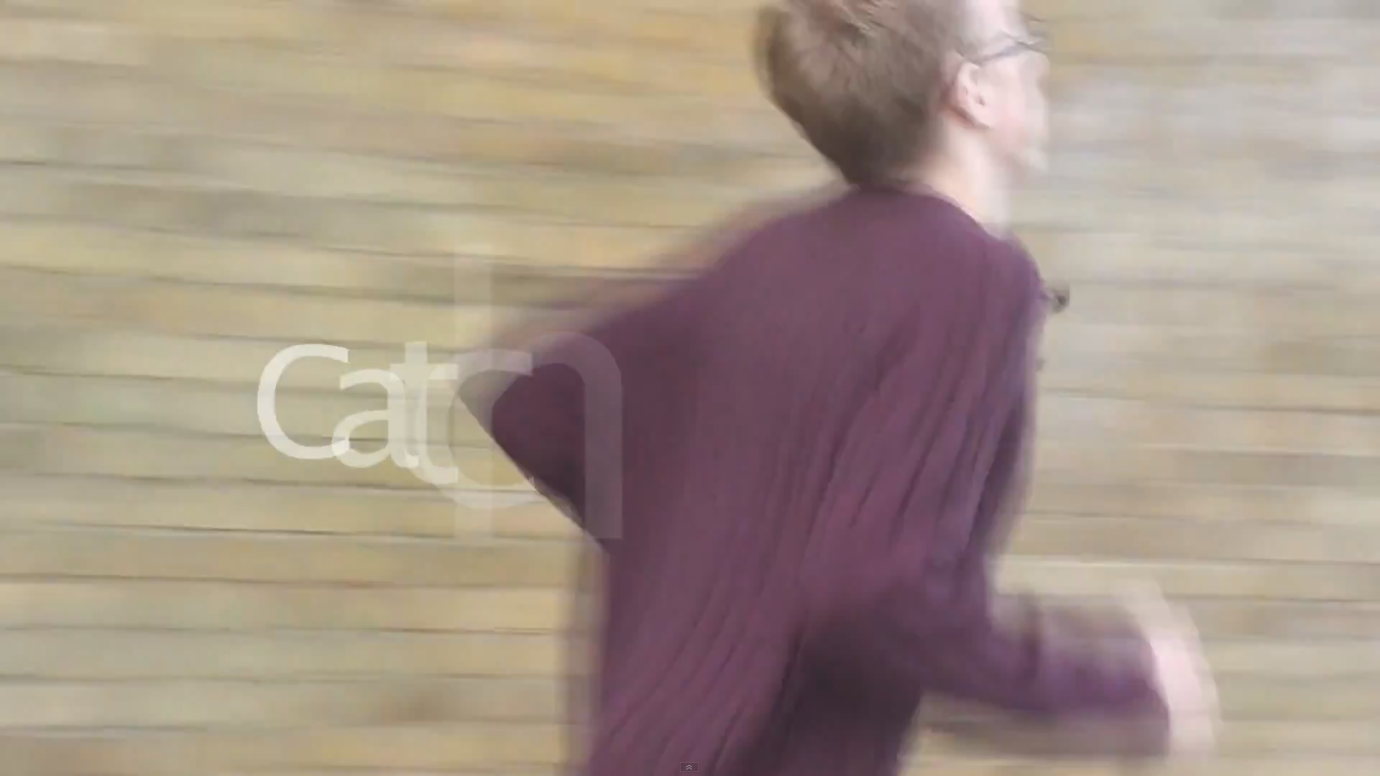
The fourth screenshot shows a side on shot of our convict running in the background, with the camera tracking his movement in this shot. You can also see the title of our film starting to fade in this shot, so our audience will eventually see what our film is called.
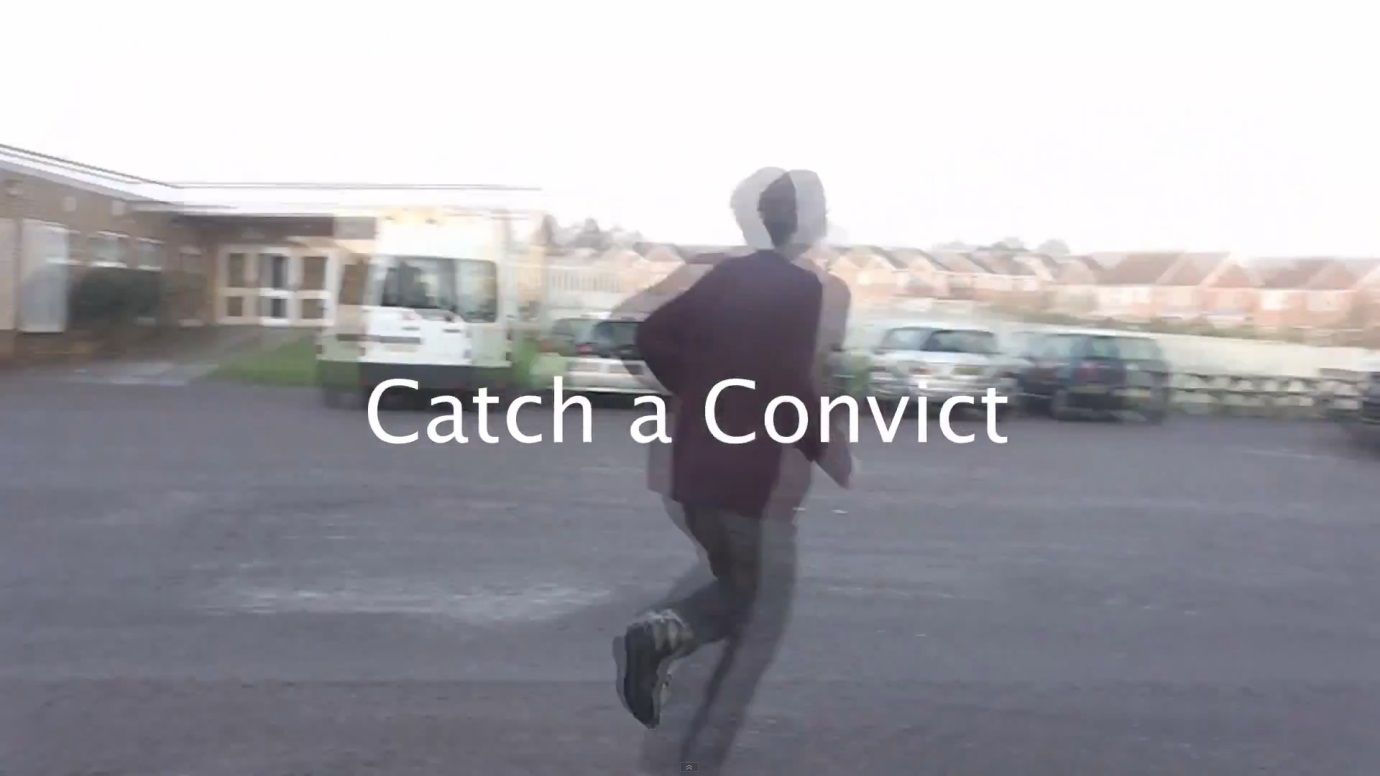
The fifth screenshot shows another side on shot of our convict running through the prison car park, with the camera again, tracking his movement. The title of our film 'Catch a Convict', appears in the foreground. We can see in this shot that he's running where ever through the prison area, he can escape through so that the prison guards are unable to find him.
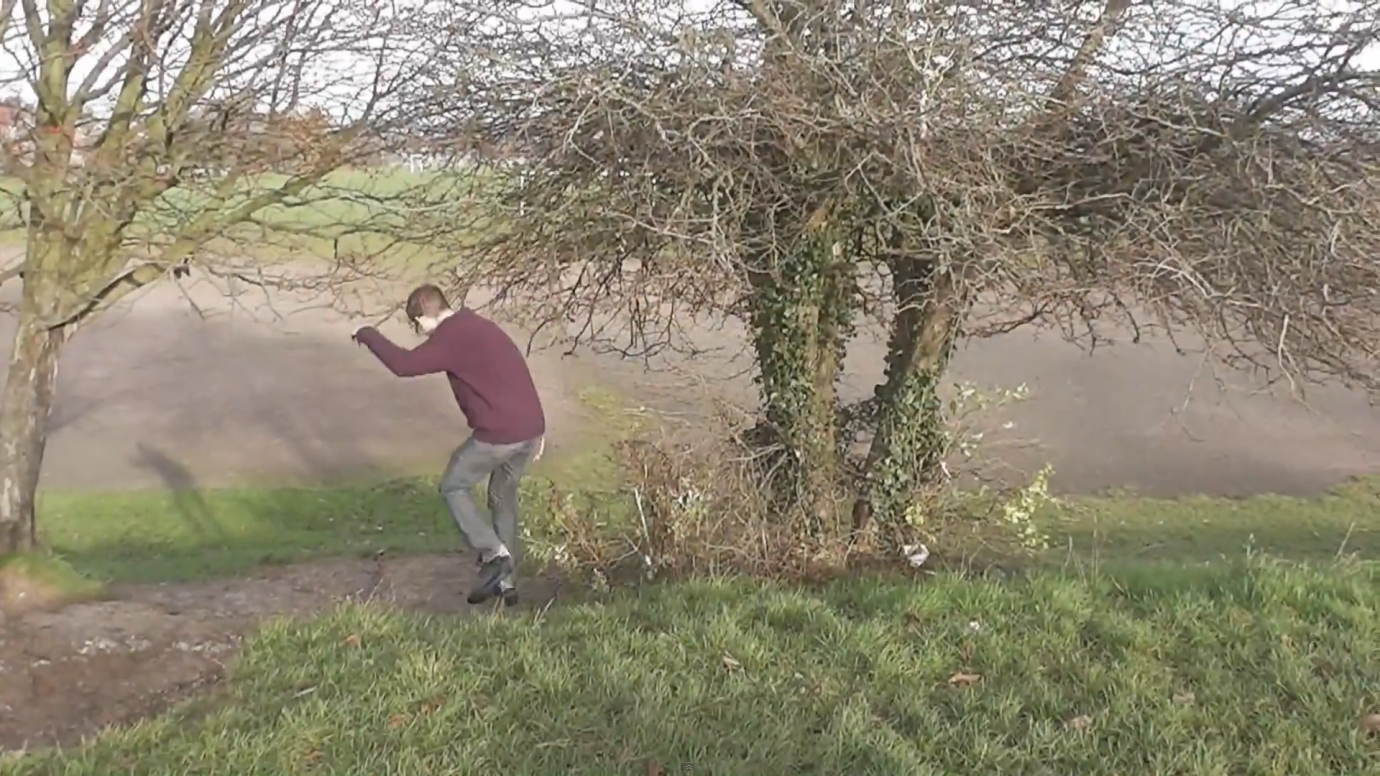
The sixth screenshot shows our convict heading towards a ditch, downhill, with the hope that no one will think to find him in that position.
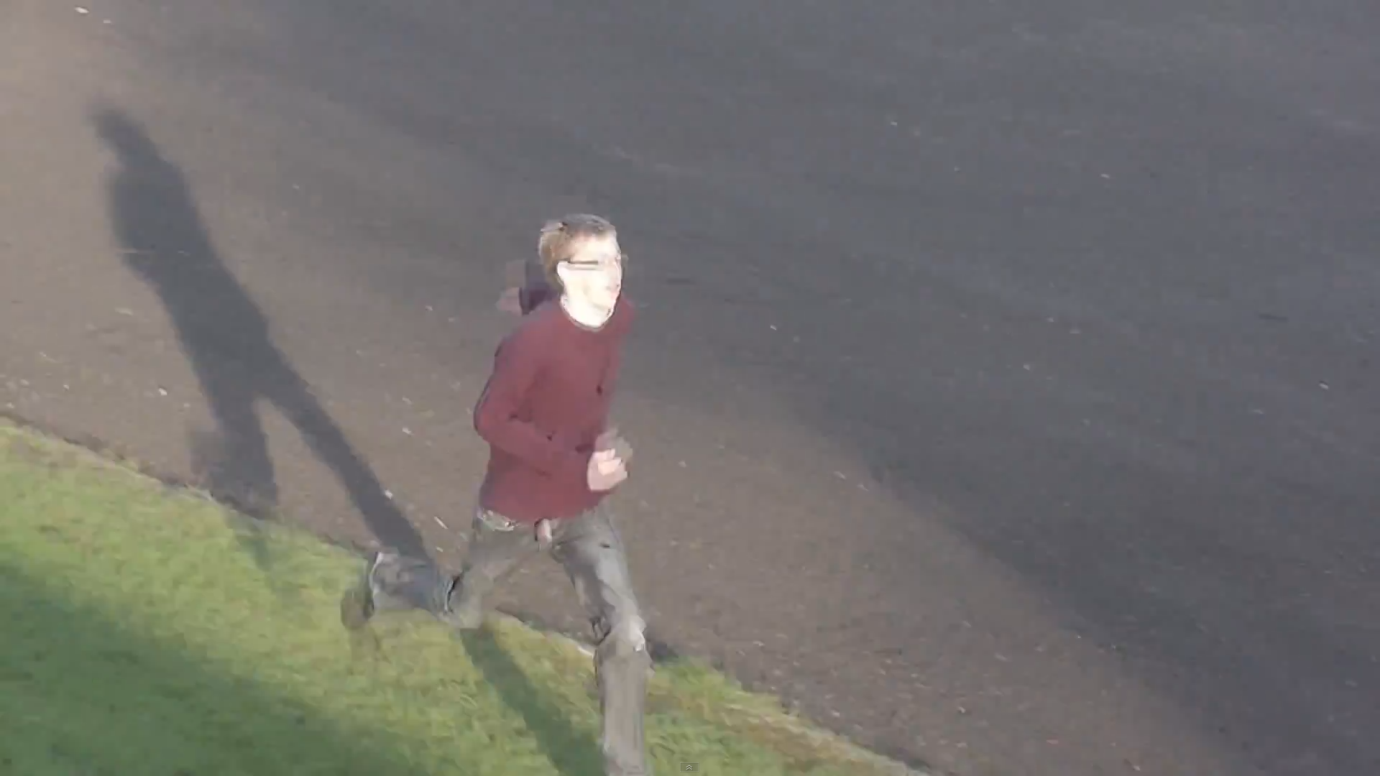
The seventh screenshot shows a long shot of our convict running alongside at the bottom of the hill, hoping that the search to find him will be called off.
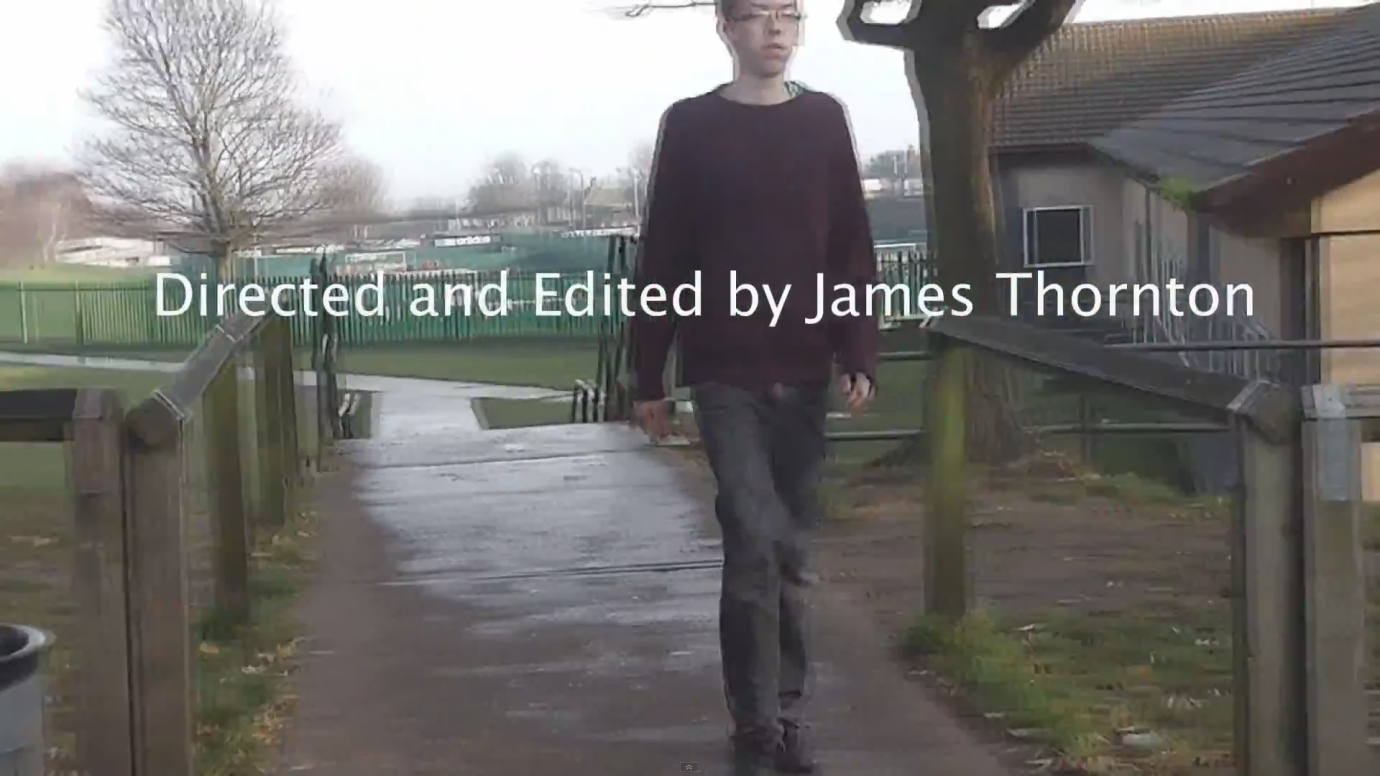
The eight screenshot shows our convict walking out of the prison entrance after running up some stairs in the background. While in the foreground, another title showing, which this time shows who directed and edited this film appears in white typeface lettering.

The ninth screenshot shows our convict walking towards the entrance of a church, so he can hide in a for a while. Notice that he's changed his appearance, so it would be hard for people to recognize him. It's a well known fact that escaped prisoners or people who were in danger of going in prison used to hide in the churches, with the hope that they would be safe from the law. In the foreground, another title which this time, which this time shows who were the people who produced this film appear in white typeface lettering.
2) How does your media product represent particular social groups?
 |

Our main social group that media product relates to is basically escape convicts. Our character in our film plays a key part because it involves him going on the run, breaking out from a maximum security prison because he was framed for a crime that he didn't even commit and no one believes that he's innocent. The sense of him running away from an area with large buildings while the atmosphere outside is quiet and boring is relevant to our product because it's what prison areas are like and as many people know, prison isn't somewhere you would want to end up. For our film we chose a location which is similar to what the outside of a prison would be like, so basically it's quiet, it's almost impossible to escape and there's no one to talk to.
3) What kind of media institution might distribute your media product and why?
A film distributor is a company that is responsible for the marketing of a film. The distributor would set the release date of the film they were distributing and the way in which that film would be exhibited and made for viewing.
My influential film: The Shawshank Redemption (1994)
Distributed by:
Columbia Pictures distributed 'The Shawshank Redemption'. This is an American film production company and distribution studio which is part of the Columbia TriStar Motion Picture Group, who are owned by Sony Pictures Entertainment. Columbia Pictures were founded in 1918 and are based in Los Angeles, California. Since 1922, they have been producing and distributing films such as Spider-Man and the James Bond film franchise.
Produced by:
'The Shawshank Redemption' was produced Castle Rock Entertainment, who are an American film and television production company. Castle Rock Entertainment is based in California (USA) as a subsidiary of Warner Brothers. The company was founded in 1987 by Martin Shafer, Rob Reiner, Andrew Sheinman, Glenn Padnick and Alan Horn. Castle Rock Entertainment have produced films such as 'Lord of the Flies' (1990) and 'The Polar Express' (2004).The budget for the making of 'The Shawshank Redemption' was $25 million. The film itself made a box office of $28,341,469. During the first week of viewing to public audience, the film itself earned $727,000 from 33 cinemas.
4) Who would be the audience for your media product?
Forename: Michael
Surname: Jenkins
Age: 17
Gender: Male
Education: 2nd year Sixth Form
Religion: Christianity
Employment: Stacks shelves at a local supermarket.
Family Background: His mother works as a teaching assistant at a primary school. His father is a car salesman. He has an older sister aged 22 and a younger sister aged 14.
Interests, pastimes and favorite media products: His past times include working with his dad on Saturdays, doing house chores and jobs for other people in the neighborhood. On Sundays and sometimes during school holidays, he plays football for a local under 19's team. His favorite media products include watching horror films, comedies and documentaries. Mostly throughout his spare time, he is busy doing coursework for subjects such as; economics, accounting, business studies and media studies.
5) What have you learned about technologies from the process of constructing this product?

We used a Panasonic HD camcorder to record the video footage for our film. The quality on the recording screen is excellent which enabled us to get very sharp footage including very good quality still pictures that we used for our animatic.

To get the video footage and the still pictures off the camera onto the computer to begin the editing process of our film and animatic, a USB cable was used to connect to the computer so that the video footage and pictures could be transferred from the camera to the computer.

A tripod was used to keep the camera stable and to make the shots accurate and steady while shooting our film and while taking the pictures for our animatic. For moving shots it gives the camera, steady movement including tilt shots. It much easier using a tripod to keep the camera steady instead of using it hand held.

The editing software we used to do the editing of our film and animatic was Sony Vegas Pro 11. For our film, we used it to create titles and to put each scene that we filmed in the correct order from the beginning to the end of the film. Sony Vegas is really simple to use if you're familiar with making videos/films with editing programs such as this.

Once the editing process for the film was completed, and once I rendered it as an MP4 video, I uploaded our film to youtube, so people could see what we had produced as part of our AS media coursework. Uploading the video to youtube gave us the opportunity to get some feedback from people who use youtube, regularly so they could comment their thoughts and opinions on what they think of our film, once they had watched it.

We used Blogger as our media studies blog to post and upload our coursework to it, so our coursework is able to be marked. Blogger keeps your work organised, all you need to do is have your coursework on individual blog posts, apart from your evaluation coursework which has to be one individual post. Blogger requires your Google mail sign in, in order to be able to access blogger.
6) How did you attract/address your audience?
https://www.youtube.com/watch?v=5PnkZV5_zxM
7) Looking back at your preliminary task, what do you feel you have learnt in the progression from it to the main product?
https://www.youtube.com/watch?v=VErKEDz7Ov8


